 By Tanmay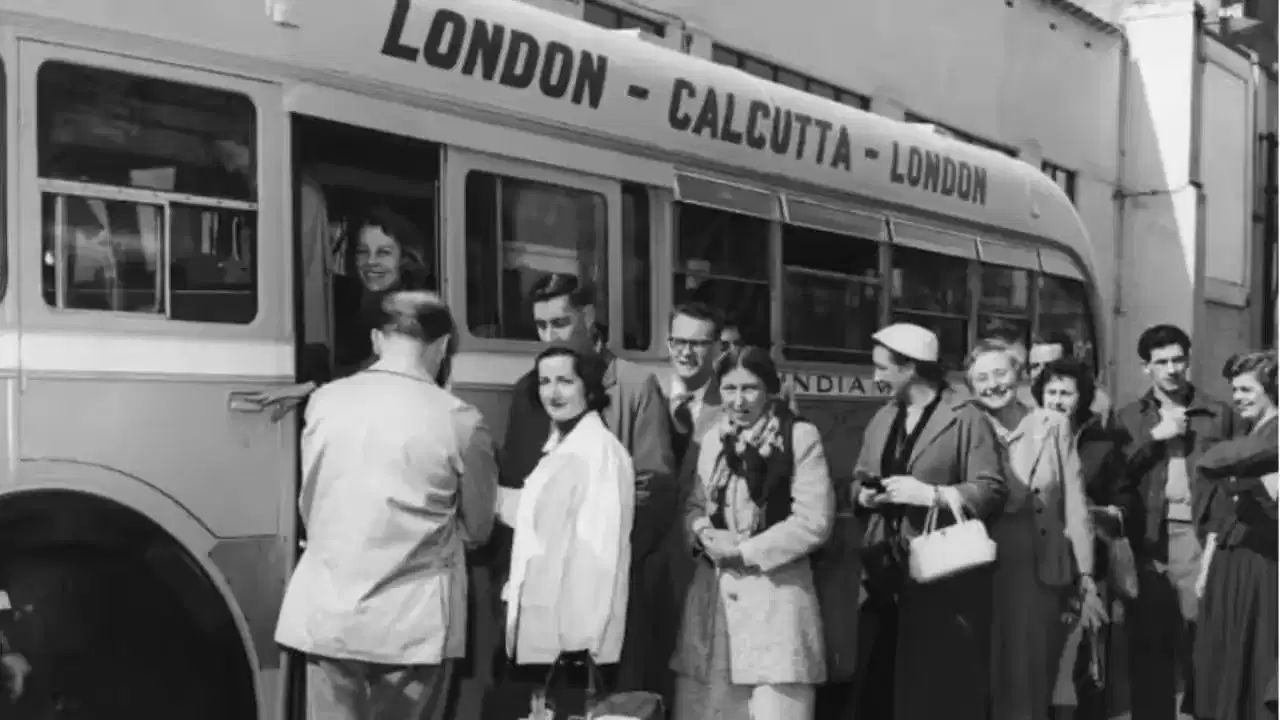
NEW DELHI — The London to Kolkata bus service remains one of the most extraordinary chapters in the history of global travel, offering an epic 50-day overland journey that feels like an impossible dream by today’s standards. In an era where a simple two-hour flight delay triggers viral social media complaints, it is hard to fathom spending nearly two months on a single commercial road vehicle. Yet, decades before budget airlines shrank the globe, adventure seekers routinely packed their bags to traverse over 10,000 miles across multiple continents on this very route.
This wasn’t a chaotic series of exhausting transfers or a one-off publicity stunt. It was a fully operational, scheduled transport system that holds an eternal spot in travel folklore as the longest commercial bus route in the world.
How the Intercontinental Route Was Born
The ambitious transit line was originally launched on April 15, 1957, by a British tour operator called Albert Travel. To the astonishment of many skeptics at the time, the inaugural coach departed from the UK and rolled safely into Kolkata (then Calcutta) on June 5, 1957, completing its maiden 50-day voyage.
The operation evolved significantly over the years. Following a mechanical breakdown of the original fleet some years later, a British traveler named Andy Stewart stepped in. He purchased one of the double-decker models, completely retrofitted it into a multi-tier mobile home, and launched Albert Tours. Popularly remembered as the Andy Stewart Albert bus, this vehicle expanded its footprint even further, eventually creating an unprecedented travel network linking London all the way to Sydney, Australia, via India and Singapore.
The Luxury Features of the London to Kolkata Bus Service
Plying a route across unpredictable terrain and shifting climates meant the vehicle had to be much more than a standard commuter bus. The double-decker was essentially a high-end hostel on wheels, engineered for maximum passenger comfort over weeks of travel.
The onboard features were remarkably ahead of their time:
-
Dedicated Sleeping Berths: Ensuring travelers could get actual rest without needing to secure hotels every single night.
-
A Full Onboard Kitchen: Equipped to prepare fresh, hot meals for passengers during long stretches between major towns.
-
An Upper-Deck Observation Lounge: Offering wide, panoramic views of the changing global landscapes.
-
A Reading and Dining Area: A dedicated lower-deck space for socializing, writing journals, or relaxing.
-
Fan-Operated Heaters: Installed to keep the cabin safe and warm while traversing bone-chilling, high-altitude mountain passes.
The Grand Tour: Traversing the Hippie Trail
This was never a monotonous, point-A-to-point-B commute; it was a deeply immersive expedition traversing multiple borders along what became famously known as the “Hippie Trail.”
Passengers had the freedom to step off the bus, go shopping, and explore iconic cultural hubs along the way. The route cut through the Rhine Valley, skipped along the Caspian Sea, and wound through historic cities like Vienna, Salzburg, Istanbul, Tehran, and Kabul.
Upon crossing into India, the sightseeing only intensified. Before rolling into its final terminal in West Bengal, the bus made extended stops at major domestic landmarks, including the capital city of New Delhi, the Taj Mahal in Agra, and the ancient, spiritual ghats of Varanasi.
PM Modi Foreign Tours: ₹815 Cr Spent – What India Actually Got!
What Was the Total Ticket Price?
Crossing half the planet did require a financial commitment, but the price tag offered incredible value for its time. The standard ticket price for the journey was set at £145.
In the economic reality of the 1960s and early 1970s, this converted to roughly ₹1,900 to ₹3,000. Crucially, this single fare was completely all-inclusive, covering:
-
Long-haul road transit across a dozen nations.
-
Daily onboard meals and hospitality.
-
Hotel accommodations during designated multi-day layovers.
Why Did the Road Went Cold?
The historic service operated successfully for nearly twenty years, carrying hundreds of curious global nomads. However, by the late 1970s, the world changed in ways that an overland highway route simply could not survive.
The demise of the service came down to two major shifts:
-
The Aviation Boom: The rapid expansion of affordable international commercial aviation made cross-continental flying accessible to the masses, reducing a 50-day trek to a mere matter of hours.
-
Geopolitical Instability: Rising political turmoil in the Middle East—culminating in the Iranian Revolution and escalating regional border conflicts—made the traditional overland route far too dangerous for commercial international transit.
By 1976, the final curtains fell on Albert Tours. Today, the memories of the green-and-cream double-decker rolling through the streets of Kolkata survive only in vintage black-and-white photos, faded paper tickets, and the stories of a generation that measured travel not by speed, but by pure adventure.

তন্ময় ‘প্রাইমইনসাইট’ (PrimeInsight)-এর প্রতিষ্ঠাতা ও প্রধান লেখক। কলকাতা-ভিত্তিক একজন উৎসাহী ব্লগার ও স্বতন্ত্র ভাষ্যকার হিসেবে তিনি গুরুত্বপূর্ণ বিষয়গুলোর ওপর তীক্ষ্ণ ও বাস্তবসম্মত দৃষ্টিভঙ্গি তুলে ধরেন।
সঙ্গীত, সমসাময়িক ঘটনাপ্রবাহ এবং রাজনীতি—এই ক্ষেত্রগুলোতে গভীর জ্ঞানের অধিকারী ইন্দ্রজিৎ তাঁর লেখায় সাংস্কৃতিক উপলব্ধির সাথে রাজনৈতিক বিশ্লেষণের সমন্বয় ঘটান। জাতীয় ও বৈশ্বিক ঘটনাবলির সাথে সংযোগ বজায় রাখার পাশাপাশি তাঁর লেখায় কলকাতার বৌদ্ধিক ও শৈল্পিক সত্তার প্রতিফলনও ফুটে ওঠে।