 By Tanmay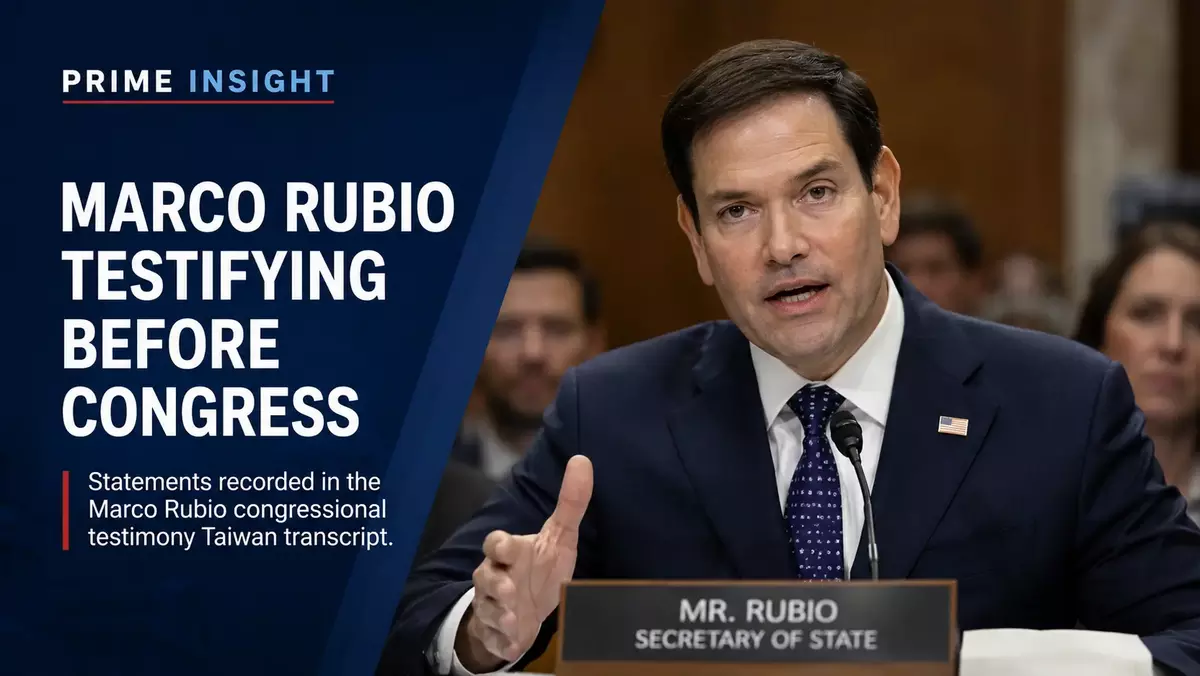
Read the latest updates on the Marco Rubio congressional testimony Taiwan transcript. Rubio defended US policy after Trump’s negotiating chip remarks.
WASHINGTON — The highly anticipated Marco Rubio congressional testimony Taiwan transcript is drawing intense global scrutiny after the Secretary of State strongly reaffirmed America’s commitment to East Asian stability. Testifying before the Senate Foreign Relations Committee on Tuesday, June 2, 2026, Rubio faced heavy questioning regarding the administration’s defensive strategies. The high-profile session forced the State Department to publicly clarify major policy gaps after recent executive rhetoric rattled regional allies.
The high-stakes legislative hearing follows a period of heightened cross-strait anxiety. Lawmakers aggressively pressed Rubio on the strategic direction of Indo-Pacific security, demanding to know if foreign diplomatic pressure is directly influencing Washington’s defense decisions.
Rubio Restores Confidence in Regional Strategy
During the session, Rubio sought to decouple the State Department’s institutional duties from unexpected presidential commentary. He emphasized that maintaining long-term peace depends entirely on administrative consistency.
“The most important thing to understand is we want to see the status quo preserved as-is at this moment,” Rubio testified. “That’s our policy, that’s what we’ve said, that’s what we continue to say. It’s a very… delicate relationship to balance, but our policy on Taiwan is not changing.”
The committee notes that a highly anticipated Marco Rubio congressional testimony Taiwan transcript will be published in full later this week. Lawmakers hope the record will shed light on why a critical $14 billion (NT$438 billion) defensive weapons package remains stuck under review, especially since a separate $11 billion procurement deal was successfully finalized late last year.
Rubio pushed back against claims that Beijing’s complaints are stalling the transfer, maintaining that Chinese opposition does not dictate sovereign American policy.
What Did Trump Say About Taiwan Arms Sales Negotiating Chip Strategies?
The necessity for Rubio’s damage-control hearing stems from actions taken by the White House following a mid-May bilateral summit with Chinese President Xi Jinping in Beijing. Foreign policy analysts have spent weeks trying to decipher: what did Trump say about Taiwan arms sales negotiating chip strategies?
In follow-up interviews conducted with Fox News on May 15, President Donald Trump openly described the pending weapons transfers as a transactional leverage tool.
“I’m holding that in abeyance, and it depends on China,” Trump revealed regarding the defense shipments. “It’s a very good negotiating chip for us, frankly. It’s a lot of weapons.”
Furthermore, Trump appeared to minimize the historic 1982 Six Assurances—which traditionally prevent Washington from consulting Beijing on cross-strait arms transfers—stating that “1982 is a long way away.” While administration officials suggested a temporary pause on the deliveries, Rubio clarified that the ultimate release timeline rests entirely with the president.
Lebanon Strikes Continue as Trump Netanyahu Call Heats Up Over Israel Lebanon Offensive
US Taiwan Status Quo Policy Timeline 2026
To understand how rapidly this diplomatic situation has shifted over the first half of the year, here is the official sequence of events leading up to this week’s historic Senate panel:
Strategic Ambiguity Meets Presidential Deal-Making
The underlying friction highlighted within the upcoming Marco Rubio congressional testimony Taiwan transcript points to a broader ideological battle in Washington. While career diplomats prioritize stability and regional deterrence, the White House increasingly views long-standing security guarantees through a transactional lens.
Foreign policy experts warn that treating defensive military assistance as a bargaining chip risks emboldening adversaries, potentially signaling that strategic alliances can be negotiated away. Allies across Tokyo, Manila, and Taipei are monitoring the situation closely to see if the administration’s actions will align with Rubio’s institutional framework or the president’s business instincts.
The committee is expected to publish the unedited Marco Rubio congressional testimony Taiwan transcript on its official legislative database within the next 48 hours.
Prime Insight will continue to monitor State Department briefings and update this coverage as official records emerge.

তন্ময় ‘প্রাইমইনসাইট’ (PrimeInsight)-এর প্রতিষ্ঠাতা ও প্রধান লেখক। কলকাতা-ভিত্তিক একজন উৎসাহী ব্লগার ও স্বতন্ত্র ভাষ্যকার হিসেবে তিনি গুরুত্বপূর্ণ বিষয়গুলোর ওপর তীক্ষ্ণ ও বাস্তবসম্মত দৃষ্টিভঙ্গি তুলে ধরেন।
সঙ্গীত, সমসাময়িক ঘটনাপ্রবাহ এবং রাজনীতি—এই ক্ষেত্রগুলোতে গভীর জ্ঞানের অধিকারী ইন্দ্রজিৎ তাঁর লেখায় সাংস্কৃতিক উপলব্ধির সাথে রাজনৈতিক বিশ্লেষণের সমন্বয় ঘটান। জাতীয় ও বৈশ্বিক ঘটনাবলির সাথে সংযোগ বজায় রাখার পাশাপাশি তাঁর লেখায় কলকাতার বৌদ্ধিক ও শৈল্পিক সত্তার প্রতিফলনও ফুটে ওঠে।