 By Tanmay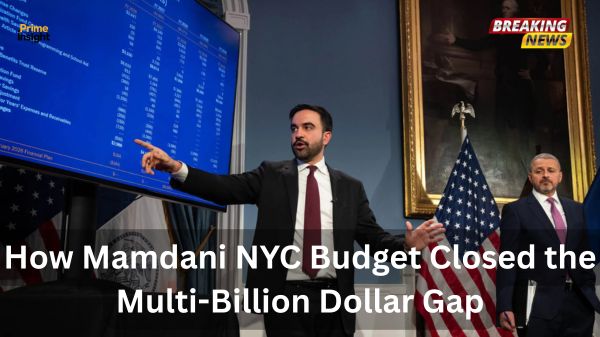
New York, May 13, 2026 — Mayor Zohran Mamdani stepped up to one of his biggest early challenges as mayor and delivered a balanced plan that surprised many observers. On May 12, he unveiled the Mamdani NYC Budget for fiscal year 2027, announcing that the city had closed a projected multi-billion-dollar gap without a broad property tax increase that many homeowners feared.
The Mamdani NYC Budget totals $124.7 billion, a significant financial blueprint for America’s largest city. This marks the first major test of Mamdani’s leadership since he took office, following warnings from his administration about a “crisis of generational proportions” inherited from previous leadership.
Mamdani NYC Budget Overview and the Challenge
When Mayor Mamdani assumed office, the city was grappling with a substantial structural deficit. Officials pointed to years of fiscal mismanagement under former Mayor Eric Adams, claiming it created a $12 billion hole across the current and next fiscal years. Gaps were allegedly understated, and federal pandemic aid had dried up, leaving a difficult reality.
Just weeks ago, the projected shortfall for FY2027 stood at around $5.4 billion. Mamdani had initially considered a property tax hike of up to 9.5% as a possible solution, but he ultimately dropped those plans in the final Mamdani NYC Budget. This decision brings immediate relief to everyday homeowners and renters who were bracing for higher costs amid ongoing affordability struggles in New York City.
How the Mamdani NYC Budget Gap Was Closed
The Mamdani NYC Budget succeeded through a mix of state support, new revenue sources, and strategic financial adjustments. Key elements include:
- Strong partnership with Governor Kathy Hochul: The state committed $1.5 billion in direct additional aid, with broader policy changes expected to deliver nearly $4 billion in total support to the city over two years. This collaboration stands out as unusually productive compared to the tense relationships of past mayor-governor pairings.
- New tax on luxury second homes: A centerpiece of the plan is the pied-à-terre tax on high-value second homes and investor-owned properties worth $5 million or more in New York City. This targeted surcharge is projected to generate $340–500 million annually, focusing on ultra-wealthy non-residents who own luxury apartments but do not pay city income taxes as primary residents.
- Pension payment deferrals: The budget includes delaying roughly $2.3 billion in certain pension obligations over two years. This move requires state approval and union support but provides significant short-term breathing room.
- Spending controls and efficiencies: City agencies implemented routine belt-tightening measures, and the plan avoids tapping into emergency reserves that are typically saved for crises.
These steps allowed Mamdani to present a balanced Mamdani NYC Budget while protecting core city services like education, housing, public safety, and child care expansion.
Improved City-State Relations in the Mamdani NYC Budget
Political analysts highlight the cooperative tone between Mamdani and Hochul as a major factor. The mayor’s early endorsement of Hochul’s re-election and joint efforts on priorities like universal child care and 3-K expansion appear to have fostered goodwill. Their partnership helped secure the state budget deal, valued at $268 billion overall, which includes the pied-à-terre tax and other municipal support.
This marks a refreshing departure from the public feuds that often characterized relations between City Hall and Albany in previous years.
Challenges Ahead for the Mamdani NYC Budget
Despite the success in closing the immediate gap, significant challenges remain. The city continues to face a lackluster job market, slower economic growth, and uncertainty from international events like the war with Iran. Some fiscal watchdogs warn that the Mamdani NYC Budget relies partly on one-time measures and delays, which could create pressure in future years if not paired with longer-term reforms.
The budget now moves to the New York City Council for negotiations, with a final adoption deadline of June 30, 2026. Council Speaker Julie Menin and members are expected to push for adjustments, particularly around protecting social services and affordability programs.
Mamdani’s administration has also increased funding in areas like hate crime prevention (raising the Office to Prevent Hate Crimes budget significantly) and landlord accountability, signaling continued focus on progressive priorities even within fiscal constraints.
What This Means for New Yorkers
For ordinary New Yorkers, the biggest win in the Mamdani NYC Budget is the avoidance of a large property tax hike, which helps keep housing costs more stable. However, the new luxury second homes tax aims to make wealthier non-resident owners contribute more fairly.
Critics argue the plan kicks some problems down the road, while supporters praise it as pragmatic and people-centered governance during tough economic times.
Prime Insight Takeaway: Mayor Zohran Mamdani has managed to steady the ship in his first budget. While the immediate crisis has been avoided, questions remain about whether this approach provides sustainable solutions or simply delays tougher decisions.

তন্ময় ‘প্রাইমইনসাইট’ (PrimeInsight)-এর প্রতিষ্ঠাতা ও প্রধান লেখক। কলকাতা-ভিত্তিক একজন উৎসাহী ব্লগার ও স্বতন্ত্র ভাষ্যকার হিসেবে তিনি গুরুত্বপূর্ণ বিষয়গুলোর ওপর তীক্ষ্ণ ও বাস্তবসম্মত দৃষ্টিভঙ্গি তুলে ধরেন।
সঙ্গীত, সমসাময়িক ঘটনাপ্রবাহ এবং রাজনীতি—এই ক্ষেত্রগুলোতে গভীর জ্ঞানের অধিকারী ইন্দ্রজিৎ তাঁর লেখায় সাংস্কৃতিক উপলব্ধির সাথে রাজনৈতিক বিশ্লেষণের সমন্বয় ঘটান। জাতীয় ও বৈশ্বিক ঘটনাবলির সাথে সংযোগ বজায় রাখার পাশাপাশি তাঁর লেখায় কলকাতার বৌদ্ধিক ও শৈল্পিক সত্তার প্রতিফলনও ফুটে ওঠে।