 By Tanmay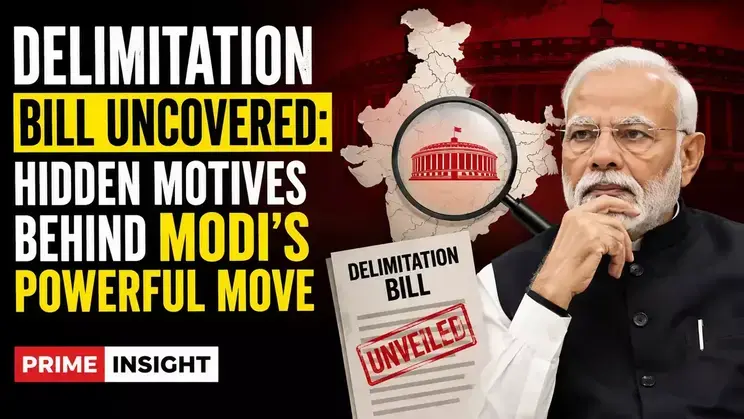
Delimitation Bill explained simply – is it passed or not? Discover what the Delimitation Bill is, why the Modi government pushed it, and the key reasons behind the move in easy language.
New Delhi: Delimitation Bill is a term you may have heard in recent news, especially around Parliament sessions in 2026. In simple words, the Delimitation Bill is a proposed law that aims to redraw the boundaries of electoral constituencies for the Lok Sabha and state assemblies. It also seeks to change how many seats each state gets in Parliament based on population.
This process is called delimitation. Think of it like adjusting the size of voting areas so that each Member of Parliament (MP) roughly represents the same number of people. The idea follows the principle of “one person, one vote, one value.”

India last fully adjusted the number of seats based on population after the 1971 Census. After that, the number of Lok Sabha seats was frozen to encourage population control. That freeze was extended until the first census after 2026. The Delimitation Bill of 2026, introduced alongside a constitutional amendment, tried to change this framework.
What Is the Delimitation Bill?
The Delimitation Bill, 2026 was introduced in the Lok Sabha on 16 April 2026. It provides for setting up a new Delimitation Commission. This commission would:
- Decide how many Lok Sabha seats each state and Union Territory gets
- Fix the total number of seats in state legislative assemblies
- Redraw the actual boundaries of constituencies
- Identify seats reserved for Scheduled Castes (SC), Scheduled Tribes (ST), and women
The commission would be headed by a sitting or former Supreme Court judge. Other members would include the Chief Election Commissioner (or a nominee) and the State Election Commissioner of the concerned state. Each state would also have 10 associate members (5 MPs and 5 MLAs) who can advise but cannot vote on decisions.
Delimitation would be based on the latest published census figures available when the commission is formed. At the time of introduction, this pointed to the 2011 Census. The Bill also sought to repeal the older Delimitation Act of 2002.
Once the commission’s final orders are published in the Gazette of India, they have the force of law and cannot be challenged in court.
Why Do We Need Delimitation?
Over decades, India’s population has grown unevenly. Some constituencies now have far more voters than others. Urban areas and certain northern states have seen faster growth. Delimitation aims to correct this imbalance so representation stays fair.
It is also linked to the Women’s Reservation Act (Nari Shakti Vandan Adhiniyam) passed in 2023. That law reserves one-third of seats for women, but its implementation was tied to a fresh delimitation exercise after a new census.
Delimitation Bill Passed or Not?
No, the Delimitation Bill has not been passed.
In April 2026, the government introduced three related bills during a special Parliament session:
- The Constitution (One Hundred and Thirty-First Amendment) Bill, 2026 – this was needed to lift the freeze and allow the changes.
- The Delimitation Bill, 2026 – the main operational bill.
- The Union Territories Laws (Amendment) Bill, 2026.
The constitutional amendment required a two-thirds majority. It was defeated in the Lok Sabha. After that, the government withdrew the Delimitation Bill and the related Union Territories bill.
As of mid-2026, the freeze linked to the post-2026 census still stands in principle, though political discussions about reintroducing a revised version continue. Reports in later months mentioned possible revised proposals, but no final law has been enacted.
You can read the official bill summary on the PRS Legislative Research website for the exact text that was introduced: PRS India Delimitation Bill Summary.
Why the Modi Government Wanted the Delimitation Bill
The government gave clear public reasons:
- Population has changed a lot since 1971. Many constituencies are now highly unequal in size.
- Expanding the Lok Sabha (proposed maximum of around 850 seats) would improve representation and allow women’s reservation to start sooner – ideally before the 2029 elections.
- Using the latest available census data (2011 at the time) would make the map more current without waiting for the full new census results.
Official statements stressed that the goal was fairer representation and faster women’s reservation.
What Some Call the “Hidden” or Underlying Reasons
Critics, especially parties from southern states, raised strong concerns. They argued the timing and design served other purposes:
- North-South imbalance: Southern states (Tamil Nadu, Kerala, Karnataka, Andhra Pradesh, Telangana) controlled their population growth better. Pure population-based reallocation would give them a smaller share of seats relative to northern states like Uttar Pradesh and Bihar. Critics said this would reduce the South’s political voice.
- Political advantage: Expanding and redrawing seats could benefit parties stronger in the Hindi heartland. Some opposition leaders called it an attempt to reshape the electoral map.
- Women’s reservation as cover: The 2023 women’s reservation law was linked to delimitation. Critics claimed the government used the popular women’s quota to push a larger, more controversial change.
- Control over timing: The proposed changes would have given Parliament more flexibility to decide when and which census to use, instead of the earlier fixed constitutional schedule.
Government leaders, including the Prime Minister and Home Minister, publicly said no state would lose seats and that a proportional increase (around 50%) was intended. However, the draft text of the bills did not contain an explicit guarantee of proportional shares, which fuelled distrust.
Independent analyses from organisations such as the Carnegie Endowment and news outlets like The Hindu and Indian Express documented these tensions in detail. For balanced reading, see:
How Delimitation Has Worked in the Past
India has had four Delimitation Commissions:
- 1952 (based on 1951 Census)
- 1963 (1961 Census)
- 1973 (1971 Census) – last time total seats were fully readjusted among states
- 2002 (2001 Census) – only redrew boundaries within states; total seats per state stayed frozen
The freeze was first imposed by the 42nd Amendment in 1976 and extended by the 84th Amendment in 2001 until after 2026. The aim was to avoid punishing states that succeeded in population control.
What Happens Next?
Even though the 2026 bills failed, delimitation is not off the table forever. After the next census is completed and published, a new commission will almost certainly be formed under existing constitutional provisions. Southern states have already called for further extending the freeze or using a hybrid formula that protects their relative share.
Any future exercise will need careful political negotiation to protect federal balance while honouring the principle of equal representation.
Simple Takeaways for Everyone
- Delimitation Bill is about redrawing voting maps and seat numbers so representation matches population better.
- It was introduced in April 2026 but not passed. The key constitutional amendment was defeated.
- The stated goal was fairness + faster women’s reservation.
- Critics fear it could shift power towards more populous northern states and reduce the South’s influence.
- The debate is really about how India balances “one person, one vote” with federal fairness between states that grew at different rates.
Understanding the Delimitation Bill helps every citizen see why population, politics, and power are deeply connected in a democracy. The final shape of India’s electoral map will affect how your voice is heard in Parliament for decades to come.
For the official constitutional background, refer to Articles 82 and 170 of the Indian Constitution and the records available on the Election Commission of India website.

তন্ময় ‘প্রাইমইনসাইট’ (PrimeInsight)-এর প্রতিষ্ঠাতা ও প্রধান লেখক। কলকাতা-ভিত্তিক একজন উৎসাহী ব্লগার ও স্বতন্ত্র ভাষ্যকার হিসেবে তিনি গুরুত্বপূর্ণ বিষয়গুলোর ওপর তীক্ষ্ণ ও বাস্তবসম্মত দৃষ্টিভঙ্গি তুলে ধরেন।
সঙ্গীত, সমসাময়িক ঘটনাপ্রবাহ এবং রাজনীতি—এই ক্ষেত্রগুলোতে গভীর জ্ঞানের অধিকারী ইন্দ্রজিৎ তাঁর লেখায় সাংস্কৃতিক উপলব্ধির সাথে রাজনৈতিক বিশ্লেষণের সমন্বয় ঘটান। জাতীয় ও বৈশ্বিক ঘটনাবলির সাথে সংযোগ বজায় রাখার পাশাপাশি তাঁর লেখায় কলকাতার বৌদ্ধিক ও শৈল্পিক সত্তার প্রতিফলনও ফুটে ওঠে।